 Analysis by Gamescozy
I like Castle Busters most when I treat it as a quick tactical contest rather than a game to leave running in the background. It is an action game built around one-on-one battles, where the appeal comes from putting together a crew and making choices that matter in a direct clash. That focus gives each match a clear purpose: read the situation, commit to a plan, and see whether your side can break through. My overall view is positive, with one important caveat: anyone who wants a deep, slow strategy game may find its brawler-style pace too immediate.
Why its one-on-one battles work
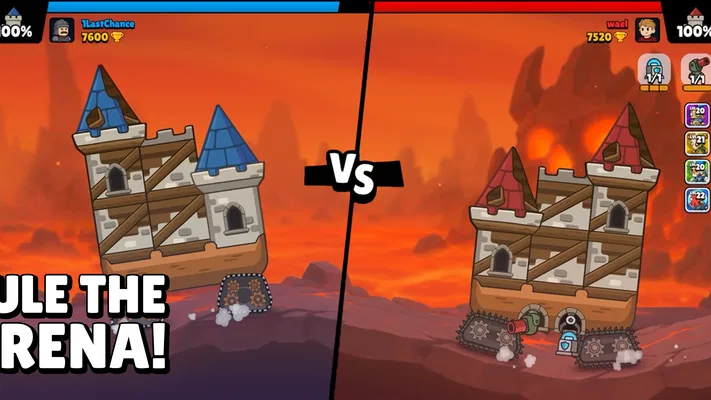
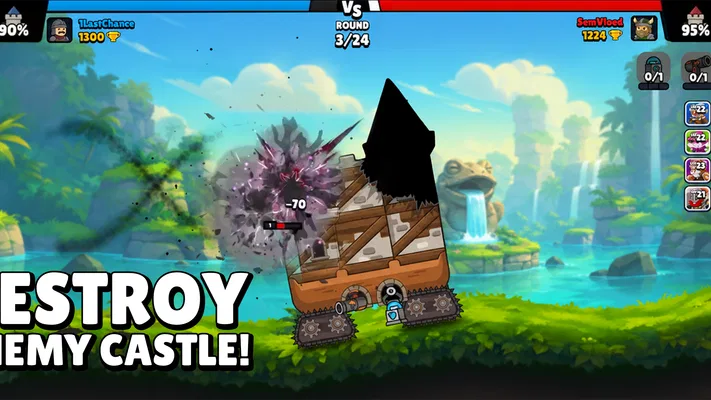
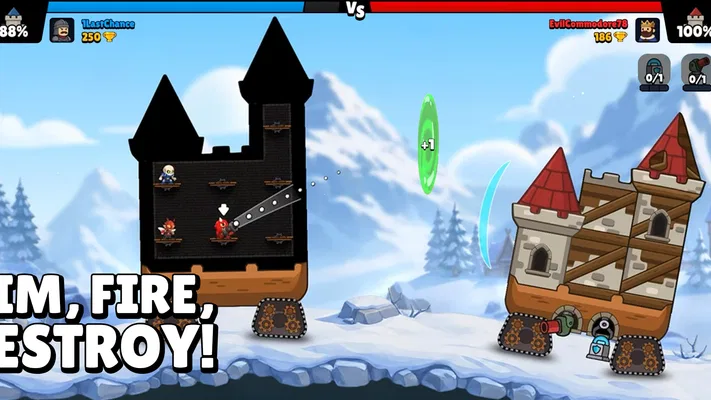
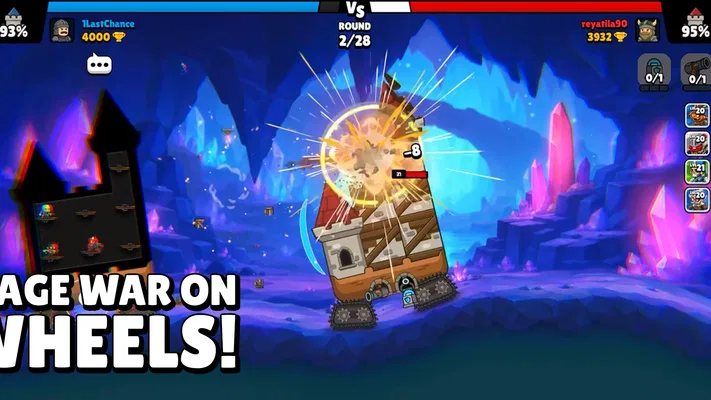
The most distinctive part of the experience is the meeting of strategy and action. Castle Busters is not simply about reacting quickly; the crew you bring into a fight shapes how you approach the opposing castle and its defenders. In a one-on-one format, there is little room to hide behind a team’s overall performance. Your decisions are exposed, and a poor choice can turn a promising push into a stalled attack.
That format also makes the game easier to understand than a larger team-based arena battler. You can concentrate on one opponent and one battlefield rather than tracking several players at once. I find that especially useful for short sessions: the central question stays legible even when I only have time for a few rounds. The trade-off is that repeated matchups can feel familiar if you are looking for a constantly changing battlefield or a sprawling campaign.
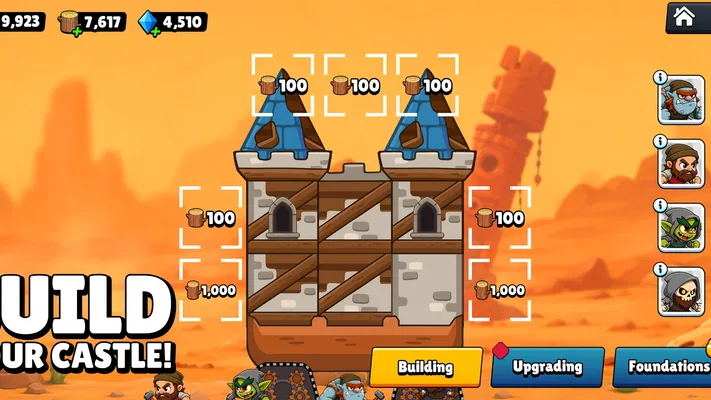
Building a crew is the strategic hook I would pay attention to. Instead of assuming that the first arrangement you try is automatically the best, I would treat each battle as a chance to notice what your lineup handles well and where it struggles. If an attack keeps losing momentum, changing the composition may be more useful than simply repeating the same approach. That is a practical way to get more from the game without turning every session into a long planning exercise.
There is also a useful discipline in playing for a clear objective. The castle-smashing premise gives each encounter a concrete direction, which helps the action feel purposeful rather than like an endless exchange of attacks. I recommend watching how your crew’s choices affect the pressure you can put on the opposing side, then adjusting when a tactic does not deliver. The game is at its best when I’m making those small decisions deliberately instead of tapping through a fight and hoping for a different result.
A good fit for short, focused sessions
For an everyday example, imagine having a spare few minutes while waiting for a friend or taking a break between tasks. A one-on-one strategy brawler is easier to pick up in that moment than a game that expects you to coordinate with a group or remember a complicated sequence of objectives. I can focus on one match, test an idea for my crew, and stop without needing to keep a larger team session going.
That same convenience has a limit. If you want a game that rewards long, uninterrupted play with a narrative journey, a large world, or a steady sense of exploration, this is not the style I would choose. Castle Busters centers its identity on direct competitive encounters. Its strongest use case is a player who enjoys thinking in short bursts and is happy to return to the same basic contest with a different tactical approach.
Where the design can feel restrictive
One-on-one play is focused, but it can also make losses feel personal and repetition more noticeable. With only one opponent to deal with, there are fewer distractions when a matchup goes badly. Players who dislike competitive pressure may find that frustrating, especially if they prefer cooperative play or a gentler solo experience. I would not recommend it as a first choice for someone who wants to relax without having to respond to another player’s decisions.
The crew-building element also asks you to engage with the game’s tactical side. If you would rather have every encounter solved by fast reflexes, the need to think about your lineup can feel like extra work. Conversely, players seeking a detailed strategy simulator may want more layers than a compact brawler is designed to provide. The appeal sits between those poles: accessible enough to grasp the basic contest, but most satisfying when you take a moment to learn from each battle.
Another trade-off is that the castle objective can make the action feel narrow compared with action games built around many mission types. That clarity is a strength when I want a straightforward match, but it is not the same as variety across different modes or settings. I would choose a broader action game if changing objectives and environments were my main priority. Here, the fun comes from refining how I approach the central face-off.
Who should give it a try
I would recommend it to players who enjoy competitive games but do not want the overhead of a large squad match. It should also suit people who like experimenting with a lineup and can accept that some tactics will not work every time. The 1v1 structure makes it a reasonable option for someone curious about strategy brawlers: the basic conflict is easy to follow, while the crew choice gives each player a reason to think beyond immediate attacks.
It is less suitable for someone who wants a purely solo adventure, a cooperative game to share with friends, or a tactical experience built around lengthy turns and extensive planning. If your favorite action games are all about rapid movement and reflexes, the strategic layer may be a welcome change, but it could also interrupt the flow you want. I would try it if the mix of direct competition and crew decisions sounds appealing, and skip it if facing an opponent is the part you least enjoy.
Compared with the usual alternatives in action gaming, Castle Busters occupies a smaller, more pointed niche than a free-roaming action title and a more tactical one than a straightforward arcade brawler. That makes it easier to recommend selectively. It is not trying to be the broadest game in the category; it is most convincing when you want a compact contest where your setup and your opponent’s choices both matter.
Practical details before installing
VOODOO developed the game, and it is free to download, though optional in-app purchases range from $0.99 to $99.99 per item. I would keep that range in mind before spending: try the core experience first and decide whether you enjoy the match structure before buying anything. The game is rated Teen, so it is worth checking that age guidance if you are choosing a game for a younger player.
It was released on July 18, 2025, and the current version is 1.20.2. It requires Android 8.0 or later. Its audience is substantial, with more than 10 million installs, around 219 thousand ratings, and roughly 7.9 thousand written reviews; the average rating is 3.8. Those figures suggest a game with broad reach and mixed responses, so I would treat popularity as a reason to explore it, not as proof that its particular competitive style will suit you.
One sensible way to approach it is to install the free game, play enough to learn whether you enjoy the head-to-head rhythm, and avoid judging it solely by an early win or loss. Notice whether adapting your crew feels satisfying or tedious. That distinction is likely to matter more than whether you usually prefer action or strategy, because this game asks you to enjoy both sides of its identity.
My verdict: focused fun, with a clear audience
Castle Busters earns my recommendation for players who want short, direct competitive sessions and like making tactical choices about their crew. Its best quality is the clarity of its one-on-one premise: there is a rival, a castle to overcome, and a lineup to put to work. I also appreciate that the setup encourages experimentation rather than making every match feel like a reflex test.
My reservation is just as clear: the focused format can become repetitive, and the competitive emphasis will not suit everyone. It is not the game I would pick for a sprawling solo campaign, co-op sessions, or a calm experience with little pressure. But if you enjoy learning from a close match and changing your approach for the next one, this action brawler is worth trying. I would start with the free version, take time to understand what your crew does well, and spend only if the core loop genuinely keeps you coming back.